Earth (the book) A Visitor’s Guide to the Human Race

originally posted on Uptown UpdateSometimes you just gotta laugh so you won’t cry and if The Onion makes you laugh till you cry then I recommend you sit on the toilet with this book for $h*t$ and giggles.

Jon Stewart’s Earth (the book) A Visitor’s Guide to the Human Race is an excellent choice of hilarity. Over 240 pages means one can easily find over 240 reasons to chuckle and snort or insert your laugh of choice. Due to its nice size (not to mention contents), it makes an excellent wrapped package to exchange. “Buy two,” copies and share the funny (available at your local…well, if things aren’t as local anymore you can still get it online. I mean, we all know by now that one chain filed for chapter 11 and closed over half of their stores and the other mainly survived due to it’s early grab of the e-book revolution but how long can a dark, parenthetical, pointing at the fall of our economy joke last).
……………………………………………………………………………………….
A Visitor's Guide to the Human Race

Click here to buy Earth (the book)

I first read (and sold) this book back when I worked at one of the above mentioned corporations. However, seeing Larry King on The Daily Show of late made me recall an image that has been forever seared into my retinas. That said, folks, for those of you who enjoy witty delivery on basically every worthy subject imaginable paramount to the evolution and survival of our divine species, well, like that famous sauce, it’s in [here]. But more importantly for those of you who (and I am talking to the vast American majority here) who do not like to read, this is the book for you. Earth (the book) is choked full of over 256 pages of eye pleasing pictures, complete with illustrations, photos, charts, graphs and many other visual aids. For those less inclined to fool your friends by staring end upon end at never ending letters from the English alphabet while never truly taking a word from the page, this book will for sure allow you to impress your peers by how quickly it leaves you, the less-likely reader, turning pages.

Crossing from commerce to culture while spanning through government, society and science and highlighted with a two page spread featuring half a Larry King, Earth (the book) A Visitor’s Guide  to the Human Race plays hysterical notes across our great globe.

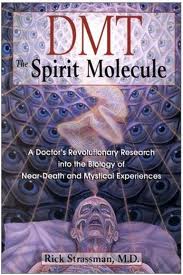
DMT The Spirit Molecule

Most people have at least heard of some form of hallucinogen whether it be mushrooms, lysergic acid or peyote but few people have heard of the only endogenous hallucinogenic agent, DMT The Spirit Molecule.

To preface this article with a brief personal account, I have never taken DMT but have had two out-of-body experiences one of which occurred during a period of high stress associated with death. In addition, I have taken psilocybin on three cases one of which can be found in an earlier article (see Snowy Silhouette Skies).

While conservatively dismissed as nothing but time-wasting mind altering substances or “hippie drugs” Rick Strassman, M.D. chronicles supported clinical studies of DMT through rich detail of the drug produced by our own bodies, follows the effects across numerous case studies and speaks to why studies of these and other substances will prove beneficial to the scientific community and to the populace at large.

This book provides documentation concerning the study of near-death and mystical experiences. It does not set out to prove or define life after death but rather records sessions focused on gathering neurological and biological data in addition to case by case testimony.

Divided into six parts, the first of which focuses on “The Building Blocks” and introduces the reader into brief jargon and needed definitions. We find here that all psychedelic drugs are divided into two main families, the phenethylamines and the tryptamines. Dimethyltryptamine, or DMT, belongs to the tryptamine family along with some non-halluncinogenic substances serotonin and tryptamine (an amino acid required for digestion. Among fellow psychedelics psilocybin (found in magic mushrooms), LSD and ibogaine (the drug known to alleviate addictive behavior) rests DMT; it is short-lived but extremely potent and primarily associated with the pineal gland and is released into the body during rare, heightened instances such as birth and death. The drug can also be injected and doing so in a controlled setting was the basis for study over the arc of many individuals during Dr. Strassman’s research. Natural releases or concentrated doses of the drug are often affiliated with interpreted “out-of-body” travels. With now a novice understanding of the spirit molecule we proceed into personal accounts.

Bullets on page 93 detail the doctor’s “dose-response” program and are as follows:

  • Recruit “well-functioning, experienced hallucinogen users” for volunteers;
  • Develop a method to measure DMT in blood
  • Create a new rating scale by which we could access DMT’s psychological effects; and
  • Characterize psychological and physical responses to several doses of DMT.

Part IV is titled “The Sessions.” Working in accordance with FDA and DEA regulations the research began in late 1990 with the first administration to associate guinea pig Philip and onto many volunteer reports. Said reports related events of the consciousness being liberated from the binding body, traveling to far off lands or outer space and encountering other forms of intelligence. Dosage followed controlled amounts either blind or non-blind the latter of which involved informing the recipient if the amount of the drug would be low or high. One classic case centered on the 39-year-old female volunteer, Willow. “Willow’s dawning awareness of a ‘light down below, the world’s light’ also reminds us of one of the last bardos in The Tibetan Book of the Dead. This is the stage in which the soul starts looking for a new body in which to incarnate, sees the lights of the world, and starts its descent” (pg. 226). The overwhelming majority of testimonies elaborate on oneness with the universe, God’s love and a greater sense of being; a shocking number share encounters with the same characters or deities of other life.

cover illustration by Alex Grey, Click here to buy DMT the Spirit Molecule

Part VI, “What Could and Might Be” discusses the future of psychedelic research. In his brilliant analogy Dr. Strassman relates the brain, as the receiving model of our reality, to a television receiving streams from different channels. DMT and like psychedelics allow us to tune into the other channels, planes of existence or parallel dimensions (recommended read here see Nick’s Picks, The Hidden Reality by Brian Greene). So long as the human mind continues to expand we will dive further down the black hole of uncertainty towards enlightenment. DMT is one of the window opening tools allowing entry into the involvement and research needed to better define our existence outside of the limiting, physical body.

Considering all the intelligent species of our planet the duty of knowing the unknown falls before us and us alone.

The Fighter’s Mind, Inside the Mental Game

If any reader has ever thought “fighting” to be some barbaric competitive outlet that has no bearing outside of brawn a read of The Fighter’s Mind, Inside the Mental Game will offer enlightening insight.

Author Sam Sheridan shares the universality in the simple line, “that everyone is fighting something,” and in this book addresses what some consider to be a cliche tag, ‘”Fighting is fifty percent mental”‘ (preface). Throughout Sam’s travels he interviews great fighters from various backgrounds and styles setting out to answer many questions from many minds. Among those there is one mind familiar to many in an unrecognized way.

Josh Waitzkin proves to be a mountain of mental development within the ring. Searching for Bobby Fischer is a film adapted from “a book that Josh’s ‘Pop’ had written about Josh’s early chess career” (pg. 184). As an early chess master both his mind and his reputation were no strangers to fame. As an author himself, Josh has written both Attacking Chess and The Art of Learning (both of which are available directly from the author’s website, here) the later of which received praise from numerous inspirational writers including Deepak Chopra. It is within this chapter that Sheridan truly taps the undeniable truth of the psychological traps and pitfalls to which the contenders are subject.

Queries stretch along lines of heroes, unmatched rivals and personal inspirations. What it takes to be one of those heroes is answered in part by esteemed trainers such as Freddie Roach and Greg Jackson.

How these men reach heightened planes of performance is unveiled through their own given circumstance. These men accomplish amazing physical feats such as is with the case of “Captain America” Randy Couture whose body has become more of a championed machine. During strenuous activity our bodies produce higher levels of lactic acid resulting in what we experience as fatigue. After years of vigorous conditioning Randy’s body does not.

The Fighter's Mind, Inside the Mental Game

Click image to buy The Fighter's Mind

Where the fight takes place stretches over continents and transcends both the mind and body. Later in the book, we see a list from Applied Sport Psychology containing qualities of “peak performance” (pg. 255):

  • Loss of fear–no fear of failure
  • No thinking of performance
  • Total immersion in activity
  • Narrow focus of attention
  • Effortless performance–not forcing it
  • Feeling of being in complete control
  • Time/Space disorientation (usually showed down)
  • Universe perceived to be integrated and unified
  • Unique, temporary, involuntary experience
Sam relates these bullets to the Zen of martial arts.

The who contained within the book includes well-known names of accomplished fighters including Rory Markham, Mark DellaGrotte,  Frank Shamrock, Andre Ward, Dan Gable and Renzo Gracie.

However many questions are answered inside of this text the why is the sought after reason which remains most elusive. During an interview with Jon Stewart, The Daily Show, Sam is asked why he crossed the boundary and traveled to Thailand to fight and replies with a less than articulate response (which he acknowledges nearing the close of the book) and follows with a comment about fighting being an “art,” to which Jon lays his exquisite wit.

There is much to be said about the passion driving performance across the board, going beyond fighting, beyond running, beyond theater. Dually personal and widely relative this read, while not providing the backing to qualify fighting as an art, does allow answers for the who, what, when, where and how of the mind’s journey while faced with the life and death bouts that extend far beyond the category of sport.

In summation, to quote a friend, the message anyone can find resonate here is that, “To be really really good at anything takes dedication and a lot of hard work.”

Sam Sheridan is also the author of A Fighter’s Heart.